

Spirituality has long been an essential part of daily life for the Vietnamese people. Deeply rooted in tradition and culture, religious practices are woven into the fabric of both rural and urban communities across the country. Whether through ancestor worship, folk beliefs, Buddhism, or Confucian and Taoist teachings, spirituality influences the values, behaviors, and rituals of Vietnamese society.
Throughout Vietnam, sacred sites such as pagodas, temples, shrines, and communal houses are not only places of worship but also important cultural and social hubs. These structures are found in almost every village and town, serving as spaces for prayer, community gatherings, and festivals. They reflect the deep respect Vietnamese people hold for their ancestors, deities, and natural spirits. Offerings, incense, and rituals performed at these sites are believed to bring peace, prosperity, and protection to families and the wider community.
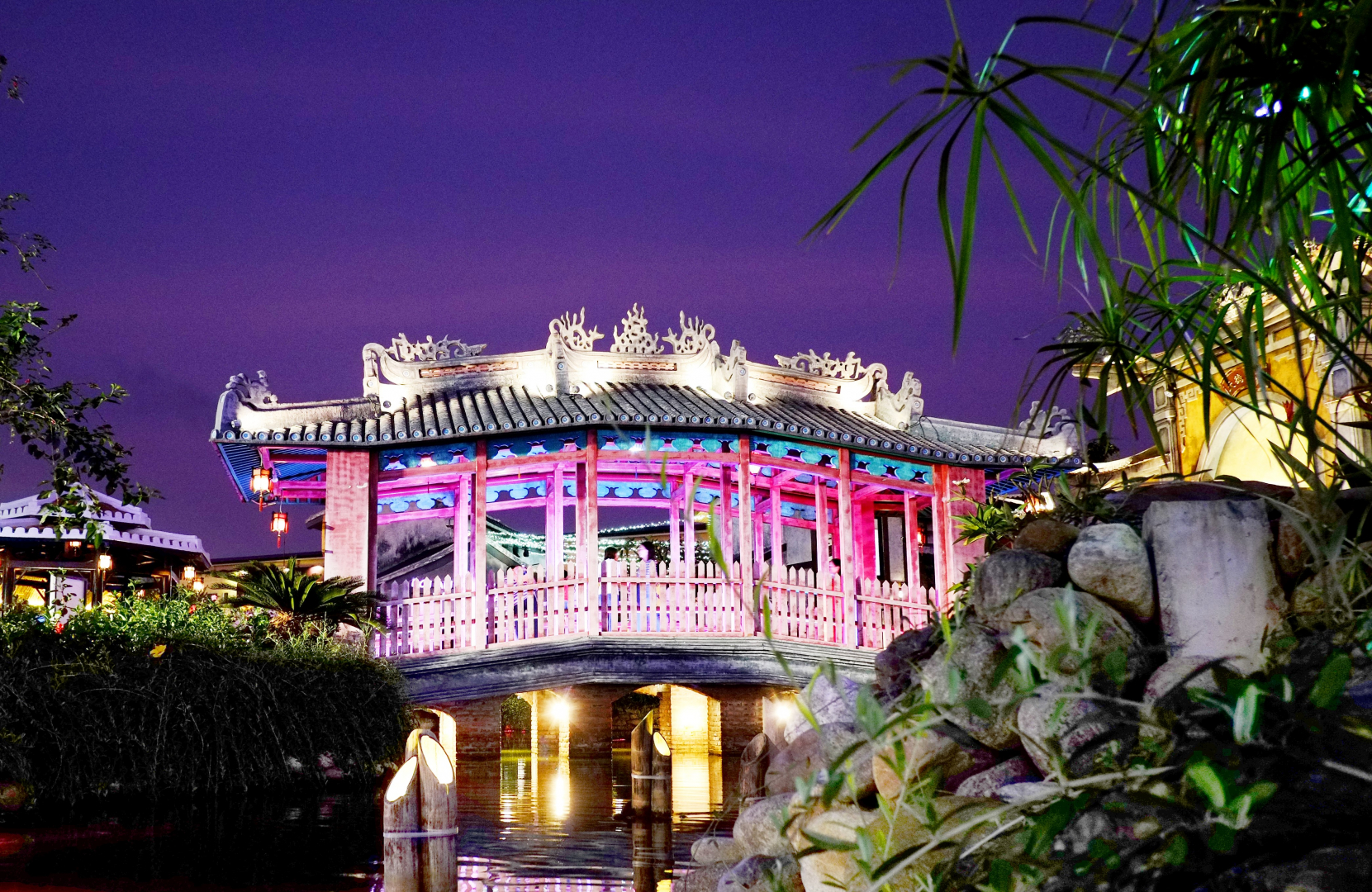
In the Hoi An Impression Theme Park, the spirituality section brings this integral part of Vietnamese culture to life. It showcases the traditional religious architecture characteristic of Hoi An in particular and central Vietnam in general. Carefully designed structures reflect the harmonious blend of influences from Vietnamese, Chinese, and Japanese cultures—communities that once coexisted in the port town of Hoi An during its golden age.
Visitors will find intricately carved wooden altars, curved tiled roofs, red lacquered doors, and delicate lanterns, all echoing the sacred atmosphere found in real-life temples and pagodas across the country. The use of natural materials such as wood and stone, combined with symbolic elements like dragon motifs, lotus flowers, and ancestral tablets, reinforces the connection between architecture and spiritual belief.
Beyond aesthetics, the spirituality section also offers insight into the customs and meanings behind various rituals. Visitors can learn about the practice of ancestor worship, the significance of the lunar calendar in Vietnamese religious life, and the roles of monks, shamans, and spiritual elders within the community.

This space is not only a tribute to Vietnamese religious heritage but also an invitation for visitors to pause, reflect, and experience the sense of serenity and respect that these sacred places inspire. It honors a fundamental aspect of Vietnamese identity—where the physical and spiritual worlds are always intertwined, and where tradition continues to shape the present.